
“Past a certain point, more effort doesn’t produce better performance. It sabotages our performance.”
I follow Greg McKeown on LinkedIn and what he generally says resonates with my philosophies about work, which is all about reducing unnecessary effort so that you can focus on the things that will get the most results.
Case in point. A very busy team is in a meeting about all the work they have to do. Someone mentions that they’ve noticed that something already public-facing doesn’t make sense and needs to be fixed. The team immediately starts spit-balling about how to fix it. There’s a simple solution but it’s not elegant and, because they are creative people, they keep feeding off each other, coming up with better solutions, all of which require them to do even more work. There’s no discussion about whether that’s the right thing to be doing right now, where it falls in the priorities. There’s no question of checking in with the strategists to see if this fits with the current strategy. They just run, full-speed, at the rabbit hole.
I’ve seen this with multiple teams, many times. It’s an easy trap to fall into. I’ve fallen into it myself.
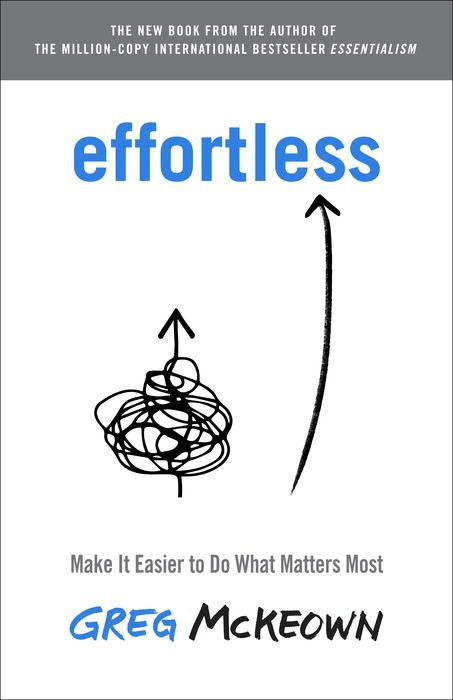
Which is why this book appealed to me.
I think my favorite chapter is the one called Define, What Done Looks Like. In this chapter, McKeown tells the story of a Swedish warship, built 400 years ago, that sank under the weight of scope creep. The king who commissioned it “did not have a clear vision of what the final product would look like.” And so the ship went from 108 feet long to 120 feet long, to 135 feet. The number of cannons blossomed from 32 on-deck, to “36 cannons in 2 rows plus another 21 small cannons, 48 mortars, and 10 other small-caliber weapons.” Later he added 700 hand-carved sculptures. Finally, two years later, the ship sailed out of harbor, a gust of wind caused the ship “to tilt severely over to one side. As the cannons dipped into the sea, water entered through the gunports.” In just 50 minutes all that effort sank “less than three-quarters of a mile from the shore.”
Man, I’ve worked on projects like that.
The next section of the chapter is called, The Heavy Cost of a Little Light Tinkering. And boy, I know the cost of that.
The book is a lot of fun to read, with great stories that drive home the point.
Recommended reading for project managers, sponsors, and anyone who is tempted to make everything perfect.
 Change+Management