
How to Correct Behavior That is Holding You Back
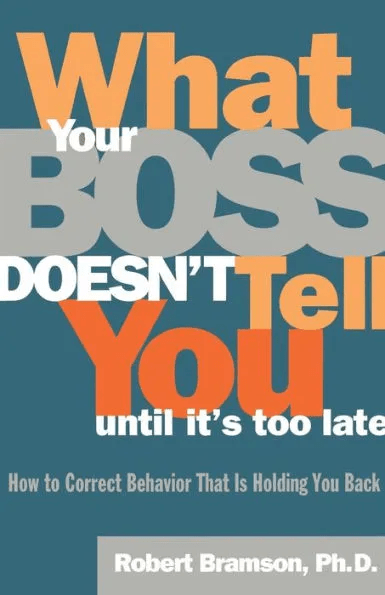
This little gem by the author of Coping with Difficult People, is for people who are wise enough to realize that they need executive coaching but, for some reason, can’t make that leap. Perhaps they don’t believe they are enough of an “executive” to qualify, or maybe they can’t afford to put money toward it, or something.
In this book, Bramson lays out the pro’s and con’s of going through the effort of changing your behavior. He starts by describing how people often find out that their behavior is preventing them from achieving their objectives: a surprising performance review, a sudden exit interview, a failure to achieve a promotion after putting in 110% on what has been perceived of as a successful project. This can be a strong indicator that something needs to change – and that something may be your behavior. At the same time, changing your behavior can be harder than it sounds – even if you know what to change. People may wish you would change – and the same people may want to hold you back. If you change, what is that going to say about them?
At one point, I found myself the “junior” member of a group of people with dominant personalities who believed that everything they did was perfect and held strong judgements about others. They took me under their wing, even helped me figure out what to wear.1 After a wake-up call, when I started to emerge from my funk and look around, I recognized that, as grateful as I was to them and enjoyed being around them, our group was perceived negatively – and I was also tired of having my ideas dismissed. When I started to change my behavior, I went from being a partner in their judgement games to being a target. Everything that I did was wrong in their eyes and they let me know it. On the one hand, it was lonely. On the other hand, I found different ways to spend my time. Ways that enabled me to continue growing and build friendships with people who didn’t feel like they had all the answers and I had none.
But how do you figure out what needs to change? I am someone who is always striving to change and, aside from my first corporate boss – who was a gem, a prince above men – people rarely told me what was holding me back. I had to figure it out myself. Once, I overheard two colleagues talking about me2 and other times I was unhappy with something I recognized for myself: perhaps I was unhappy being unhappy; perhaps I didn’t like the pressure I felt as a manager to treat the people who worked for me in a way that didn’t square with how I think people deserve to be treated. Bramson provides methods for examining clues you may already have. He provides insights on how to get actionable feedback from those you work with, who may not want to give you information or may be afraid to. He helps you connect the dots.
Once you’ve determined what to change, Bramson discusses crafting an action plan, getting feedback to make sure you’re on track, techniques to recognize progress, and how to make sure that people see that you are changing – including how to change beliefs with executives who may not be close enough to you to see that you are changing. It can be particularly frustrating when you do the hard work of reinventing yourself, see results with your team, your peers, and your direct supervisor – and then walk into a meeting with a senior VP in another department and realize that they still see you as the entry-level employee whose new contact lenses popped out during your first meeting with them3. This is one reason why people will leave an organization, go work somewhere else for a few years, then return: it’s easier when you’ve been away, to reset perceptions and earn that promotion you always wanted.
I once filled a position with an external candidate over a very qualified internal candidate who I really wanted to promote. But the previous holder of the role had been an internal candidate who wasn’t quite ready, and her inexperience had given the team a black eye with stakeholders. While the internal candidate was qualified, she still read as “developing”, and I made the decision to bring in someone new and polished from outside the organization to reset the perception of the team. By the time that person decided to move on a year later, the internal candidate had polished her style and established her own relationships of trust with key stakeholders. She was a natural first choice for the role. Instead of questioning my judgement for promoting another person with unrealized potential, stakeholders applauded the decision.
One of the best parts of the book are the stories that Bramson tells about people he’s worked with, that represent behavior patterns that people tend to fall into that could benefit from change. As a storyteller, I always find it easier to learn through stories about others. You may recognize your colleagues in Tough-Minded Tony, Ernie the Earnest Engineer, Friendly Frieda, Idealist Ilene, Carl the Closet Codependent, Cathy the Competent Complainer, Terrible-Tempered Ted, or one of the other examples Bramson provides.
Or you may recognize yourself.
A short book, an easy read. The first step on a path forward.
- I had been feeling like crap and my wardrobe reflected it. I had gone from wearing beautiful blouses and skirts to wearing clothes with rips, tears, stains. Looking back now, I know my lack of self-care was undermining myself. My colleagues were confident enough to tell me that I couldn’t dress like that and one of them even took me shopping. My clothes still screamed “hide me!” but at least they were knew and in good condition. ↩︎
- I can’t remember exactly but it was something along the lines of, “I don’t have time to listen to her misery today.” Wow. I didn’t like being perceived of that way, so I put in a huge effort. I pulled back into myself like a snail so that I wasn’t spreading gloom and kept my work conversations all business. When a started re-emerging a little at a time, I made it a point to say positive things about other people’s work and to look for positive things to say about my life. If the gossip train started tearing someone down, I reframed with something positive then exited the conversation. I started meditating at lunch. If I found myself wanting to say something negative, I paused, focused on my breathing, and said a little meditation until it passed. Oh god it was so hard. At that point, I didn’t trust anyone so I received no outside feedback. I didn’t know it had worked until a few years later, when one of the two people I had originally overheard complaining about me said something that made me realize she had completely forgotten that I had been that negative person she had complained about. That felt really good but it was a long time coming. ↩︎
- True story. ↩︎
 Change+Management