
The Spirit of Christmas, as Found in Laura Ingalls Wilder’s Books
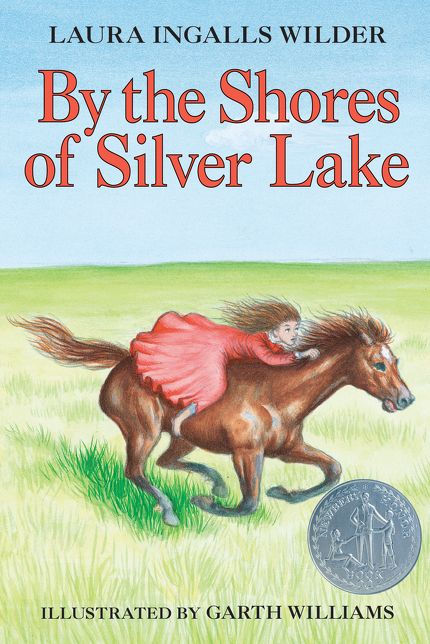
Cheating a little bit because I’ve already written about this book, but I figure I’ll still tally 365 – or 366, as my sister reminded me that 2024 is a leap year – because there were several days where I wrote about several books in a single post.
Anyhow, today, I’m focusing on how the author describes Christmas in this book. BTSOSL, as I mentioned in my earlier post, is a relief from the destitution and disaster of the previous book and the following book. In On the Banks of Plum Creek, the family’s crop was destroyed by grasshoppers who then laid eggs that, owing to a mild winter, hatched and devastated the crop the following year, and then the year after. Pa had – the first year when the crop looked so promising – built a multi-room house with glass windows and a new stove, and indulged in new clothes and little gifts for the family, and farm equipment. When the crop didn’t come through, he found himself in debt and was forced to walk hundreds of miles for weeks on end to find work, both that year and the two following. After that, he was able to harvest small crops, but they don’t live up to the bounty he expected.
When this book starts, following those two meager crops, we learn that the family has been sick, Ma and Carrie are still recovering, and Mary has lost her sight. Now, on top of all the other bills, are doctor’s bills. And now they have one more mouth to feed: baby Grace. Pa and Ma have been fighting: Pa wants to move West again but Ma doesn’t want to leave civilization.
Owing to a family connection, Pa gets a job as a bookkeeper on a Westward railroad building crew, sells the farm and the stock, takes the bare minimum of their possessions in the wagon, followed by Ma and the girls who ride out on a train when Mary is well enough. At the end of the season, the railroad surveyors tell Pa that they’ve decided not to stay the winter and ask if the family will stay in the house that the railroad built and supplied for them, and watch over the railroad’s equipment. Pa snaps up the offer and the family settles into, what is for them, the luxury of a well-built, insulated home and an impressively full pantry. This Christmas is so impressive that Wilder devotes three chapters to the one Christmas in this book.
On Christmas Eve – a white Christmas – the family is all putting final touches on gifts for each other in secret, madly sewing or knitting while Carrie is asleep or Ma is out of the room or Pa is doing chores, and then quickly hiding their gifts. Mary knits Pa socks, Laura makes him a necktie out of a scrap of silk. Carrie and Laura snatch time in the attic, where they sleep, to sew an apron for Ma out of an old calico curtain they had brought with them. Mary hems a handkerchief to go with it. Laura and Ma and Carrie sew bed shoes for Mary out of an old blanket. Laura and Mary knit mittens for Carrie out of leftover yarn, in bits and pieces while Carrie is making the bed in the morning.
Grace gets the most beautiful gift of all: earlier in the season, Pa had accidentally shot a swan – he had thought it was a goose – and Ma saved the beautiful, soft, white down-covered skin, and cut a tiny hood from it, and a collar and cuffs for a coat that Laura and Mary and Carrie sew from a length of blue cloth that matches Grace’s eyes.
Pa hunts a jack rabbit for Christmas dinner and teases the girls that it’s too cold for Santa to come. “We don’t need Santa – ” Carrie blurts out “- we’ve all been -” before she catches herself about to give away secrets.
After a dinner of corn meal mush and milk, the family sits around the fire, comparing memories Christmases past. Then Pa pulls out his fiddle, which he hasn’t played since before the grasshoppers, when they suddenly hear a knock at the door. They are living at the end of the railroad tracks, in unsettled country, days away from the nearest neighbor – who could it be? This was a dangerous time in the West, one of the most violent times with industrial gun manufacturers making firearms widely available.
It turns out that it’s Mr. Boast, a homesteader that Pa had met earlier in the book – and his young wife, who is closer to Mary’s age that Ma’s. They feed them and give them a place to sleep, Ma and Mrs. Boast bedding down in the parent’s bed and Pa and Mr. Boast bedding down with blankets from Carrie’s bed (Carrie, Laura, and Mary cuddle up together). It seems unusual to us now that two strangers might share a bed but, since the beginning of hotels, strangers often shared beds as a matter of course. It’s all working out – but Laura and Ma wonder to each other in muttered asides, what about Christmas presents for the unexpected guests?
The next morning, Pa and Mr. Boast venture into the cold to tend to the horses. Ma and Mrs. Boast get the fires going and start breakfast. When Laura hurries downstairs, she is surprised to see the table already set with wrapped gifts at every place. Laura pops back upstairs to the attic and tells her sisters that, since they didn’t hang stockings the night before, Ma put the presents on the table – and she somehow knew where the girls had hidden their presents for each other and for her. Laura grabs the last gift from a hiding place in the attic and returns downstairs.
Although Ma tells Grace to settle down and “be seen and not heard”, when Pa and Mr. Boast return, Pa tosses Grace in the air, the way he used to toss Laura in Little House in the Big Woods, making Grace scream with laughter. “Laura had to remember she was a big girl now or she would have laughed out loud, too. They were all so happy in the warmth full of good smells of cooking, and with company there for Christmas in that snug house.” Carrie is so excited that she turns pale; but Grace is too small to really understand what Christmas is about.
Before breakfast, they take turns opening gifts, starting with the guests. When Mrs. Boast opens her gift, the girls are surprised that it contains Ma’s best Sunday handkerchief. (Considering how much of their lives have been lived too far to attend church regularly, it probably hasn’t had much use.) Mr. Boast’s package contains wristlets that the girls has seen Ma knitting for Pa. Pa is delighted with the new necktie Laura made him and the socks that Mary had knitted. Ma praises the sewing of the apron the girls had made and the girls are glad they included the handkerchief, since Ma had just given hers away. Mary and Carrie admire their presents and Laura is surprised to find that her sisters had been making her an apron just like Ma’s, at the same time. The Boasts did not come empty-handed, bringing a small bag of Christmas candy for each of the children.
But the best thing, the author says, is when they put the coat and hood on Grace. “She was so beautiful and so happy, blue and white and gold and alive and laughing, that they could not look at her long enough. But Ma did not want to spoil her with too much attention.” So they quickly remove the clothing and put it away. This passage about Grace makes me wonder if an earlier passage had gotten edited out, something about Grace and the Scarlet Fever that she and Ma and Carrie and Mary had suffered from. Throughout the book – indeed throughout the series – Laura talks about how pale and thin and weak Carrie is; and we know that Mary lost her sight. Perhaps Grace’s health was also at risk, that Laura makes the point that the best part of Christmas is celebrating Grace’s beauty, laughter, and the fact that she is alive.
After breakfast (codfish gravy and mush, oh boy), everyone does chores and Ma, Laura, and Mrs. Boast make dinner: sourdough biscuits, breads, roasted jack rabbit with bread-and-onion stuffing and gravy, mashed potatoes, coffee, canned peaches in golden sauce, Johnny cake, and cucumber pickles, followed by apple pie. This feast – the best the Ingalls have had in any of the books so far – is courtesy of the supplies that the railroad surveyors left behind, especially the peaches and pickles which are treats the Ingalls couldn’t usually afford.
After dinner, more chores, and the family helps Mr. and Mrs. Boast move into the nearby surveyor’s office where they will stay the rest of the winter, until the weather breaks enough that they can move out to their homestead and build a house. Good friends will be nearby all winter!
Then they all troop back to the main house and the men settle down to a game of checkers. The day is rounded off with a surprise that Mrs. Boast hid even from her husband: popcorn!
And Laura thinks, “Every Christmas is better than the Christmas before. […] I guess it must be because I’m growing up.” Laura is 12 or 13 at this point.
And, as abundant as this Christmas has been – with the family together, healthy, well-fed, well-housed, in good spirits, and with good company – it’s the best the family will experience for a long time.
In this book, the emphasis seems to be on health and gratitude for the abundance that they receive. Modesty is still a point – modesty, not as in avoiding indecency – but as in not laughing loudly, not attracting too much attention to yourself, not heaping too much praise on people.
This Christmas, is to me, about respite, a safe refuge in a world of separation, storms, and risk, and illness.
 Change+Management
How strange- whenever I read commentary on the Little House books, their poverty is front and center, but when reading the stories, I don’t seem to notice their poverty, as the family focuses on being busy, thankful and happy in one another’s presence.
LikeLike
Exactly. It makes you realize that happiness and gratitude does not come from having things.
LikeLike