
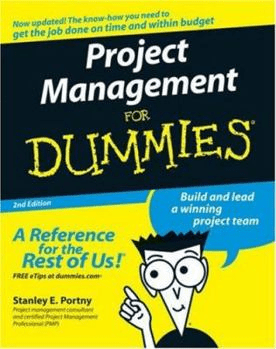
Yeah, I’m not going to spend a lot of time talking about this book.1 Instead, I want to talk about a project that was on my mind a couple of days ago.
Let me start with this: do you know what this building is?

Give up?
This is the empty building – still vacant although this was taken five years ago – where a B. Dalton Bookseller was located until the mid-90s, when it was remodeled and reborn as an early version of a Barnes & Noble.
The reason I was thinking about this was that the store was closed during the remodel, and that worried The Powers That Be because a closed store doesn’t make any money. (And, I suspect because a remodel of any kind in NYC always takes longer than planned, residential or commercial. For those of you who haven’t been through an NYC remodel, you can just apply the Celsius to Fahrenheit conversion hack: double it and add 32. Double what and add 32 what, you ask? Whatever! Double the time, double the cost, double the number of decisions, double the compromises. Remodeling in NYC sucks.2
Anyhow, the C-team being anxious about customers shifting loyalty elsewhere (I don’t know where, the market was pretty limited), they put up a big sign where that “your logo here” is in the photo with a phone number. If you lived in the neighborhood, you could call that number, one of the otherwise unemployed booksellers would take your call, write down your order and credit card number, and deliver your book to your address.
Mind you, this is long before bn.com and looooooong before the A-word or other online shopping sites. When you called, you were talking to a human being and a human being got ahold of your book and delivered it to your apartment, brownstone, or townhouse. They did this the whole time that the project management crew was arguing with the contractors and the inspectors and trying to get rid of all the mice and asbestos and rewriting the project plan a dozen times.3 The project was planned to take a few months and I think – I was distracted at the time – that it actually took a couple of years.
They took and delivered orders for two years.
Working bricks and mortar retail teaches you some important things about business. As a store manager, I learned how to budget, plan, forecast; how to manage a P&L; how to manage a team; how to smooth a supply chain; how to merchandise; how to write and manage a schedule – just to name a few skills that retail managers learn that people who, oh, go into marketing or go straight from undergrad into earning an MBA, learn.
One important thing we learned was how to organize around growing sales.
If your store was in a mall and something happened that diverted the mall traffic flow – road construction or something – that could impact sales by 10-50%, depending on how bad and how long it was. As the store manager, you had to figure out how to project the impact on sales, adapt your scheduling4 get people to your store despite the bad traffic, how to increase your conversion rate so you could capture more sales from the customers who did walk into your store, and you had to go out into the community and try to leverage sales with schools and B2B opportunities – and you had to, once the interruption had ended, to get people to rediscover your store, events to drag them in so you could make up the sales you lost during the time your store was impacted.
For some reason, I’ve been thinking about this scrappiness – scrappiness being a quality that online start-ups think they own – and also about what defines a project as successful.
A PM could define success as completing the remodel of that B. Dalton to B&N as finishing on-time, on-budget, and on-scope. They would therefore be unsuccessful. But even if the project was accurately forecasted to take double-the-time+32 and double-the-cost+32, if the customers lost interest while the store was closed and transferred their loyalty to another local bookstore (?!?), the project would have been a failure.
And that’s something that the this kind of book will never teach you.
- Here’s my thoughts on this book, which is in my collection: I picked this up when I was teaching myself project management a gazillion years ago – well, the org where I was working was about 10 years behind on things like Project Management and Change Management, so let’s say “a gazillion + 10 years ago.” The book does it’s best to dumb down PMI standards “for the rest of us” but, honestly, unless you’re building a battleship, a spaceship, or The Freedom Tower – or are managing projects in Great Britain, where they seem to love using every single tool in the PMBOK – PMI standards are a bit of overkill. Get your PMP if you want – it might qualify you to get through the ATD for jobs that require certification – but don’t expect that to make you a great PM. I’ve known some terrific PMs who don’t have PMPs and some awful PMs who do, and one PM who collects certifications like keyfobs and is absolutely awesome, with or without them. You don’t even need to buy this book anymore – the dummies materials are available for free, online. Regardless “the rest of us” don’t need all the fancy bells and whistles in this book or in the PMBOK. Your average “hey, I’m just a manager, why are you making me manage this project” manager doesn’t need all that. Hence my book, which I will get around to publishing at some point, about project management for managers who didn’t even realize project management is a thing, Effective Implementations. ↩︎
- Remind me to tell you about the time my kitchen contractor took three extra months and I hosted Christmas for my 10 in-laws without an oven and with wires hanging out of my ceiling. Failure of the executive sponsor to call it. (I was also the executive sponsor.) ↩︎
- True story: when the store was a B. Dalton, the management team tried and tried to get rid of the mice. They wanted to put down poison or glue traps but the booksellers complained about animal cruelty and tossed those out. So then they had the exterminators put in live traps. In theory, the traps would fill up with mice, the exterminators would retrieve the traps 2-3 times per week – there were that many mice – and escort the mice to their uncle’s farm upstate. In reality, the exterminators would drop by 2-3 times per week and… the traps would be empty! How could that be? Well, it turned out a mouse-sympathetic bookseller doubted the story about the upstate farm and was, when no one was looking, emptying the full traps into the street outside the store and then replacing them. The mice, being mice, would follow her right back into the store. It wasn’t until the manager caught her and made it clear to the bookseller that her behavior was unacceptable that the mouse problem was solved. ↩︎
- Delicately so that you could maintain the important payroll-as-a-percent-of-sales ration but also not cut hours so much that a) the store couldn’t run any more and b) your booksellers didn’t go get jobs that could give them more hours. ↩︎
 Change+Management