
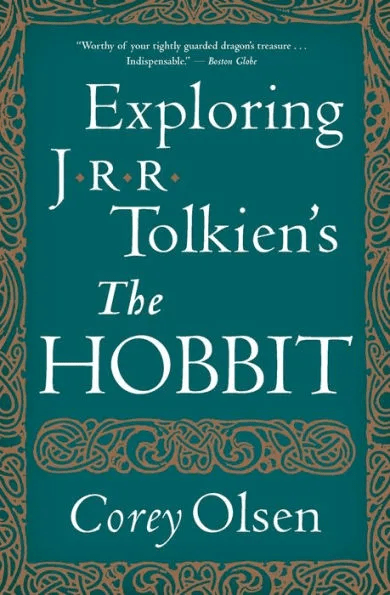
I have read The Hobbit and The LOTR at least once a year since I first read them in 7th Grade and I had enjoyed reading them as stories. I liked the adventure of The Hobbit, silly Bilbo worrying about pocket handkerchiefs; the riddles and puzzles and mysteries; the narrow escapes; the awesome power of the dragon; the horror and sorrow of the Battle of Five Armies. Even in The Hobbit, middle-earth as a world was fully fleshed-out and you had a sense of the age, of a time of greatness fallen into the past.
The world, in The LOTR, seems dangerous, but the danger seems specific, aimed at Frodo, at getting the ring back – with the exception of The Balrog maybe, and Old Man Willow in Tom Bombadil’s forest. In The Hobbit, however, the world’s dangers seem more random, less aimed with purpose. You get a sense that middle-earth, outside The Shire1 is not a safe place to roam at will: ambushes by orcs; trolls camping out on the hillside; giant spiders in Mirkwood. Even those who become allies – Beorn, the Wood Elves, the Eagles, Bard – are dangerous in their own right.
This book, however, gave me an appreciation of The Hobbit on a whole nother level. Olsen takes the book chapter by chapter, outlining Biblo’s growth as a person, and the role that luck and fate play in the story. He breaks down the poetry and music of The Hobbit, showing how the structure of the songs illuminate the characters of the singers – helpful with the dwarves, but essential to understand the song that the elves welcome Bilbo to Rivendell which is otherwise nonsensical and beneath the dignity of Elrond’s people.
I think the passage in this book that sticks with me the most, is when Olsen points out that if the Bilbo that we find smoking his pipe in contentment in Chapter 1 had been lifted up and dropped into Mirkwood or Lonely Mountain, he could never have survived the spiders or an encounter with Smaug, and he would never have thought to steal the Arkenstone in defiance of Thorin. That’s when I sat up and started reading these books differently.
You see a similar growth of Merry and Pippin in The LOTR.2 Merry and Pippin start out as carefree hobbits, out for a little adventure. They make the same kinds of careless mistakes that Bilbo made in The Hobbit, getting tangled up with The Old Forest and the Barrow-wights. As the books progress, they remain “unquenchable” (as Gandalf calls Pippin) but they learn to use those swords that Tom gives them from the barrow-wight’s tomb. At the end of The LOTR – the book – they have fought in battles, Merry stabbed the Witch-King of Angmar, and Pippin fought in the battle at the great gate to Mordor. They come home changed hobbits, bigger not just in height but in stature and in confidence, easily rallying their friends and neighbors to take on Sharkey’s boys and drive them from The Shire.
Olsen also talks about Tolkien’s writing style and how it evolves throughout The Hobbit. It is a children’s tale and Bilbo’s earlier trials are leavened with humor: the dwarves, who prove themselves prodigious fighters later, sing silly songs about breaking Bilbo’s dishes; the trolls, while scary, are foolish, easily tricked by Gandalf into arguing until the dawn’s light turns them to stone; even Bilbo’s taunting of the spiders is like children taunting each other. It is only later, when the dragon destroys Lake Town that the scary parts are left to stand on their own; you see how the avarice of the dragon affects Thorin and turns him against friends and allies; and the Battle of Five Armies ends badly for everyone. And then Bilbo returns home to find his friends and relations greedily dispensing of all the little treasures that he missed on his journey. The writing shifts and grows as the reader comes to trust the writer, to see that, while scary things will happen, we will end up at the fireside in Bag End, eating muffins by the fire.
I thoroughly enjoyed reading this book and I keep hoping that Olsen will write a similar book about The LOTR. So far, no such luck.
- And we know why that is, right? Because Gandalf had one of the three elven rings. Elrond used his ring to preserve peace in Rivendell; Galadriel used hers to preserve peace in Lothlorien; and Gandalf used his to preserve peace in The Shire. That’s why Saruman is so determined to pervert The Shire; and why there’s nothing Sauron would like better than to see happy hobbits turned into miserable hobbits. ↩︎
- The books, not the movie. The movies treated Merry and Pippin very badly. ↩︎
 Change+Management