Well, yesterday’s storm clouds have passed and I discovered a few New Yorkers that haven’t retreated to hill or shore for the weekend and made plans.
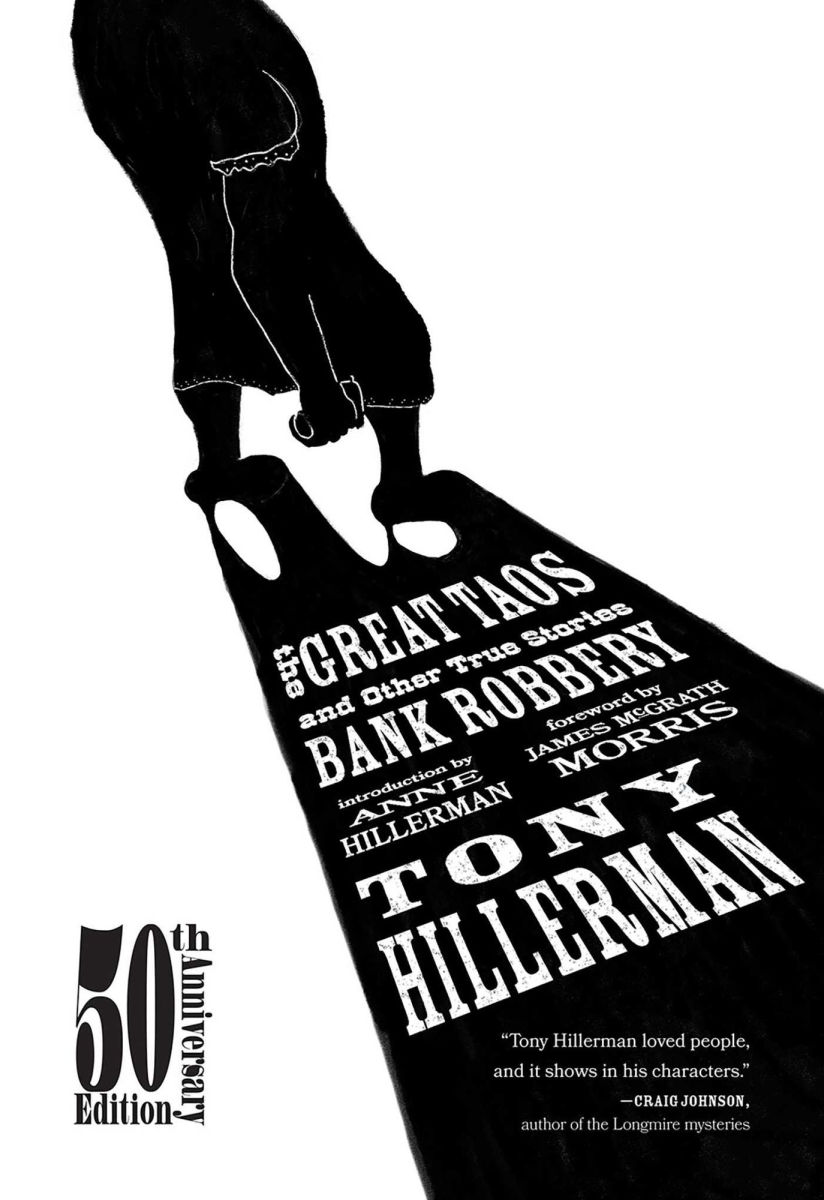
But what really blew the rain away was spending an afternoon reading this charming little collection of Mark Twain-ish New Mexico stories (in the journalistic sense). The book is short and you can finish it in an afternoon, as I did, though the afternoon lasted longer than the cat (who prefers her first course of dinner at 5 pm) prefers. Well, I got a late start…
Arranged long then short then long then short again, these tales reflect what I love about Tony Hillerman’s writing (although this is all that I own of his currently, owing to the flood which decimated my collection in the ’90s – 1994, if I recall accurately – so I really should give up that excuse). I loved most of his characters and the world they inhabited – when I read, I like vivid worlds – and their sense of humor. What I disliked was their predictability. The bad guy was always white, often rich, certainly entitled – if not by class, by education, or just that sense of entitlement that narcissists feel is owed to them.
The sly western humor runs throughout these essays. In Black Jack Ketchum and the Sixteen Faithful Bartenders, after being told by a fat man complaining about “how hard it is to raise turkeys because they’re so dumb” that a 1908 flood in Folsom, NM had swept away 16 bartenders who had “faithfully stayed at their posts of duty “(along with the heroic telephone operator who had warned the town folk to evacuate), Hillerman remarks that he had later “dug up all the data [he] could find, including the fact that […] its peak population of bars was seven. […] But seven bars divided into sixteen comes out two and two-sevenths drowned bartenders per bar.” Later still, Hillerman conducted more research and didn’t find “anything about the sixteen faithful bartenders but […] asked an Albuquerque barkeep about it and he said for a story like that he was willing to apply some willing suspension of disbelief.”
And, paraphrased, this passage from The Hunt for the Lost Americans, quoting the Anthropologist, Jerry Dawson, could apply to job hunting in 2025: “This Folsom man had to be a pretty select specimen, both physically and mentally. To hunt the animals he did on foot he had to be fast, and agile, and plenty smart. The ones who weren’t wouldn’t survive…”
Someone asked me the other day where I get my gift for dialog when I’m storytelling. I mumbled something about my father, an introverted man who grew more so as his hearing – damaged by shelling in Vietnam’s DMZ – deteriorated but who, after a beer or two, relaxed into telling the most amazing stories. Stories that I urged him to record on paper but he which he refused, lost in his dream of treading in LeCarre’s footsteps with fantasies about Kosovar snipers shooting from the roof of Blair House. (Exact sales unknown, but at least 1, which he proudly told me was purchased by the then-mayor of Kosovo.) And, when that wasn’t accepted by the questioner, mumbled further about my grandfather, a tall-tale teller who lived for the family dinners where my grandmother gathered a willing audience for his favorite stories.
But if I could write – or speak – like anyone, it would be Mark Twain. His brand of American humor, the dry wit, followed by the tall tale, the imagery that conjures up the Western landscapes (or the European city-scape or the middle-eastern landscape or Hawaii) – ah! He lures you in with fact, gradually embroidering until, before you know it, you’re sucked into such wild improbability and it all rings so emotionally true that you’re almost afraid not to believe it, although you know you shouldn’t responsibly do so. Now that is writing. I think I read A Connecticut Yankee in King Arthur’s Court once upon a time, but I haven’t read his other works of fiction, preferring Roughing It and Innocents Abroad.
Anyhow, these Tony Hillerman essays, which predate his mysteries, are a lot of fun to read and cheered me right up. Make sure you read the forewords and the notes at the back.
As his daughter, Anne, states in the Introduction, “I remember my father’s excitement for the first edition of The Great Taos Bank Robbery. […] In fact, when a bosque fire threatened his home […] and he and my mother thought they might have to evacuate, two first editions of The Great Taos Bank Robbery were among the few books they packed to save.”
Which tells you where these essays fell in Hillerman’s own estimate.
 Change+Management