
The Spirit of Christmas, as Found in Laura Ingalls Wilder’s Books
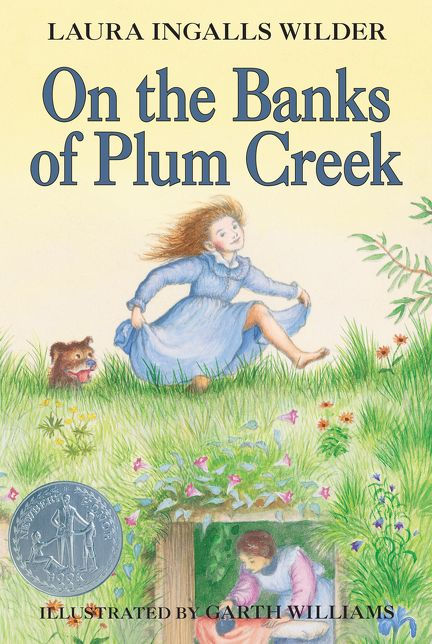
On the Banks of Plum Creek describes three Christmases. The first mention of the first Christmas is when the narrator states, “Then Thanksgiving was past and it was time to think of Christmas.” A lesson that modern marketers could learn from. I thought perhaps it was only in the U.S. that advertisers went insane, starting Christmas earlier and earlier – having worked in retail for so many years, I remember the year that Christmas jumped before Halloween, to start in early October, and then to start just after Back to School. Now, I love Christmas, and would have been listening to Christmas music since July in my office – mainly because we had to get in the Christmas spirit to work on December planning while it was hot and humid outside. Luckily the frigid office air conditioning contributed to the illusion that it was winter in the office. But I would also be perfectly happy to have Christmas start on Black Friday.
The First Christmas
Laura’s first thought related to this first Christmas is, “There isn’t any fireplace” because they are living in a dugout, a hole in the ground with, instead of a fireplace, a wood stove. Santa will not be able to come down a chimney when there isn’t a chimney. (Clearly the girls’ thinking about Santa has evolved to reflect the works of Clement Moore since Little House on the Prairie, where Santa delivered presents via pack mule, and even delegated delivery to Mr. Edwards.) But when Mary asks Ma how Santa can deliver presents without a chimney, Ma pauses, then asks what the girls want for Christmas. The girls answer much as modern children might answer, even Carrie joining in: candy, “and a new winter dress, and a coat, and a hood” “and a dress for [Laura’s doll] Charlotte.”
Where did all this avarice come from? The previous year they had been overwhelmed by the gift of a tin cup and a piece of candy and a cake and a shiny penny, and suddenly this year, they are wanting winter dresses and coats and hoods – where would they even wear them? They’re living in a hole in the ground and, when they walk to school the next spring, the other children make fun of them for wearing dresses that are too short and for not having any shoes, and the girls secretly spend one of their Christmas shiny pennies on a pencil for their slate because they don’t feel they can ask Pa for more money. They are poor and suddenly they’re dreaming of fancy clothes that they won’t have anywhere to wear. At this point, they are too far from town to even go to church on Sundays.
But Ma’s question, it turns out, is a set-up. Because then she asks what they think Pa wants for Christmas. In earlier books we had been told that Santa only brings presents to children and that grown-ups must give each other presents; and now Ma is inviting them to think about what Pa might want. It’s a shift.
And Pa wants horses. (On an earlier page, he had been stating that breaking the land would be much easier with horses than with the oxen he has.) ” ‘Would you girls like horses?” Ma then asks. “I only thought… if we all wished for horses, and nothing but horses, then maybe -‘ “
Laura is forced out of her avarice. “Laura felt queer. Horses were everyday; they were not Christmas. If Pa got horses, he would trade for them. Laura could not think of Santa Claus and horses at the same time.” And then Laura cries out, “Ma! There IS a Santa Claus, isn’t there.”
Ma calmly reassures her that there is a Santa Claus. And then Ma continues, “The older you are, the more you know about Santa Claus.” Santa is not one man, he is everywhere on Christmas Eve; he comes down all the chimneys at the same time.
“I guess he’s like angels,” Mary says slowly, trying hard not to let go of the thought of Santa. But Ma undercuts that assumption, too.
Santa is everywhere and all the time. “Whenever anyone was unselfish, that was Santa Claus. […] Christmas Eve was the time when everyone was unselfish. On that one night, Santa Claus was everywhere, because everybody, all together, stopped being selfish and wanted other people to be happy. And in the morning you saw what that had done.”
Oh boy. You read this lightly, perhaps as a child, and you think what a nice thought that is, let’s all be nice and unselfish so everyone can be happy. Like Laura you might also wonder, “If everybody wanted everybody else to be happy, all the time, then would it be Christmas all the time?” And you also, struggle, as Laura and Mary do, to live up to Ma’s ideas, to be unselfish. They know Ma wants them to wish for nothing but horses for Pa. But they say nothing, glancing quickly at each other, and “even Mary, who was always so good, did not say a word.”
As an adult, you can read between the lines: Ma is setting them up because there isn’t enough money for the horses the family needs to invest in the future, and for the children to receive gifts.
Laura, Pa’s favorite, is the first to crack, wrapped safely in his arm, she tells him she wants Santa to bring horses and Mary supports that thought. (Another departure from the earlier books where Santa didn’t bring gifts to adults.) Pa is relieved and happy. Laura and Mary get ready for bed, “soberly” undressing and then “soberly” buttoning up their nightgowns and tying on their nightcaps1. They are resolved to be unselfish, but they don’t like it. Laura even includes a silent wish in her evening prayers, “And please make me only glad about the Christmas horses, for ever’n’ever again.” That allows her to be comforted by the thought of the horses – this is one of the first hints we get that Laura is horse-mad2 – and by the sound of Pa’s happy fiddle playing in their warm, safe home.
The girls also create a button string for Carrie, working away when Carrie is having her naps. Then it is Christmas Eve and the girls are surprised when Pa encourages them to hang up their stockings for they have resolved themselves to the thought that Santa would only bring horses. But Pa tells them that “little girls always hang up their stockings on Christmas Eve don’t they” so Laura and Mary go to sleep “wondering.” And, in the morning, their stockings contain little packages with beautiful, store-bought candy, the kind your grandmother always kept in a bowl on her coffee table, the kind that, when you try to sneak out a piece, the whole bowl comes out in a one giant piece.
And then there are the horses, which Laura and Mary ride as Pa leads them down to the stream to drink. The girls are so delighted with the horses, and “Pa and the horses and Mary and Laura were all happy in the gay, cold Christmas morning.”
This Christmas underscores again the importance of sacrifice, of gifts being something that the family receives as a unit, as opposed to individually. And also marks a shift in the concept of Santa: he goes from being the one who brings gifts to children; to a concept of generosity that happens any time, anywhere that you want someone else to be happy, without thinking of yourself.
The Second Christmas
The second Christmas is quite a contrast to the first Christmas. Over the second year, Pa is so confident in his crop that he builds, on credit, a magnificent house out of milled lumber and furnishes it with a fancy stove and glass windows. Ma, quite rightly, is more worried than delighted when Pa surprises her – and rightly so, for grasshoppers come before the crop is harvested, and eat up all their crops, and the family is so poor again – and now in debt – that Pa walks 300 miles in broken shoes to find work and support the family.
The winter stretches cold and wet, but not cold enough to snow – or even to freeze the ground and kill off the grasshopper eggs – and there are no thoughts of Christmas at all. Although they go to church on Sundays – where Nellie Olesen shows off her new fur cape, causing Laura to be jealously angry – the girls have stopped going to school: it’s just too far for them to walk alone in winter.
One day, Ma surprises the girls by – on a Wednesday afternoon! – having them take a bath and put on their new dresses and their best hair ribbons. Ma and Pa get dressed up and Pa hitches up the horses and they hustle into town at night where the church is lit up.
The girls are confused, and even more confused when they see, at the front of the church, an unusual sight: “Standing in front of the crowded benches was a tree. Laura decided it must be a tree. She could see its trunk and branches. But she had never before seen such a tree. Where leaves would be in summer, there were clusters and streamers of green paper. Thick among them hung little sacks made of pink mosquito-bar. Laura was almost sure that she could see candy in them. From the branches hung packages wrapped in coloured paper, red packages and pink packages and yellow packages, all tied with colored string.” Also hanging in the tree are scarves and mittens, shoes, and garlands of popcorn. More presents are under the tree: washboards and tubs, churns, dashers, sleds, and shovels and pitchforks. And Laura also sees, hanging from a branch, a little fur cape, with a muff to match!
Ma tells the girls that it’s a Christmas Tree and the girls are surprised: “they had not expected Christmas yet because there was no snow.” Were the girls equating snow with Christmas? Or was it that, alone in their isolated prairie home, they had lost track of the days? As we all learned in 2020, without a daily reminder of what day it is, and nothing to look forward to, it’s easy for time to stretch forward in one long blur.
When the preacher talks of Christmas, Laura can think only of the fur cape hanging from the tree. When the congregation sings Christmas carols, Laura can’t sing, she’s too overwhelmed because “in the whole world, there couldn’t be a store so wonderful to look at as that tree.” Then the Sunday school teachers begin taking the items off the tree and handing them out and Laura is stunned – all those wonderful things on the tree are gifts for people in the congregation: “the lamps and people and voices and even the tree began to whirl!” Someone hands her a bag of candy and a popcorn ball; and then Mary. Someone hands Mary blue mittens and hands Laura red mittens.3 Ma is given a warm shawl, Pa receives a scarf. Carrie receives a doll and screams for joy.
That fur cape and muff are still hanging on the tree. Through all the chaos of people giving out and receiving and opening gifts, Laura can’t stop thinking about the cape and muff: some little girl will receive them; Laura wants them; they can’t be for Nellie because Nellie already has a cape; and Laura wants them; who could they be for because Laura wants them. This obsession with a thing is something new and a worldly attachment that Ma would certainly disapprove of. While it is stated that Laura does not expect more than her mittens, she keeps watching the cape and muff. She sees them removed from the tree; the person holding them reads a name but Laura cannot hear it over all the “joyful noise” and she looses sight of them in the chaos.
Carrie is handed a little china dog; and Laura is handed a little china box with a teapot on top, a jewelry box, Ma says – as if Laura had jewelry to put inside it or could even imagine having jewelry. Ma has a gold bar that she puts in her own box but Laura has never been given jewelry, and yet she receives this box. She is standing there, juggling her box and Carrie’s dog and her mittens and her candy and popcorn ball and thinking what a wonderful Christmas it is. And then someone says, “And these are for you” and hands Laura the cape and muff, and all of her other gifts magically disappear: Laura is lost in the softness of the furs in her arms. Around her, people are packing up and wishing each other Merry Christmas, and Laura doesn’t even see them. She barely notices that Mary also received the new coat she had asked for the previous year.
It is then revealed that the coat and the fur are hand-me-downs from people “back East” who were responding to the preacher’s request for donations for his parish. It doesn’t matter to Laura and Mary – these are the nicest things they’ve ever owned – and Pa and Ma will be warm when they come to town for church that winter. As they leave the church and walk to the wagon, “Mary was so beautiful in her Christmas coat. Carrie was so pretty on Pa’s arm. Pa and Ma were smiling so happily; and Laura was all gladness.” When Laura runs into Nellie, she isn’t jealous anymore, “she only felt a little bit of mean gladness” as she wishes Nellie a Merry Christmas. Nellie just stares for Laura’s “cape was prettier than Nellie’s, and Nellie had no muff.”
Wow, from the previous Christmas where the girls learned the lesson of wanting things for other people, now they are showered with gifts, so many gifts that, amassed on and around the tree, Laura can only compare them to a selection in a store, harkening back to Little House in the Big Woods, when the family visits Pepin and Laura is amazed by the wealth of goods in the store: welcome to consumer culture. Yet Laura’s and Mary’s new clothes from this cornucopia of gifts are second hand, and the girls don’t care, they are just happy to receive them.
The Third Christmas
The tepid winter of the previous season does not kill the grasshopper eggs, the grasshoppers return and eat the crops, and Pa again must again travel far from home to find work and raise enough money to make payments on the farm and support the family. While Pa is gone, Ma must tend the stock and do the outdoor chores; and the girls do the indoor chores.
As winter sets in, the temperature drops until it is cold even in the house and blizzards set in. Ma ties a rope between the house and the barn so that she can milk the cows but the cold winds blow most of the milk out of the pail and freezes the rest of it. The house is cold and dark; on the third day of the storm, Ma and the girls huddle around the stove, too oppressed by the storm and worried about Pa – who has written that he is walking home again – even to eat; and when Ma tries to rally their spirits, they tell her that they just want to go back to bed, and they do.
On the fourth day, the house is so cold that even the stove doesn’t keep the house warm. The storm continues to blow until the afternoon, when Laura notices a golden light through a window, scrapes the ice off the window, and peers out to see blue sky and what looks like a bear stumbling toward the house.
It’s Pa!
As it turns out, Pa had returned home through town, where he bought a fur coat, cheap, off a man who was giving up on pioneering and needed the money to head back East. Pa put his new coat on over his old coat – the poor condition of the old coat has been a running theme throughout the book; even when Pa that first year was spending irresponsibly, he gives the money he had earmarked for the coat to the church – and began walking home. When the storm set in, he became disoriented but didn’t have any choice to keep walking, and stumbled into a hole in the ground, where he was at least out of the wind and the snow. After a nap, Pa woke up warm enough – although not that warm – and hungry.
At this point, Pa asks what day it is, and Ma replies Christmas Eve, and we learn that the girls again have lost track of the days and had no idea that it was Christmas time. That it is Christmas is important because, in addition to the coat, Pa also bought some Christmas surprises in town. He bought oyster crackers – which he eats while trapped in his hole by the storm. He bought Christmas candy for the girls, which he ate every bit of. (“Oh, Pa, I am so glad you did!” Laura and Mary say. And Pa says that, with the frigid winter, the grasshopper eggs will die and they can raise a great crop and the girls can eat candy all year round, not just at Christmas. Oh, Pa…)
Then the storm stopped and Pa dug out of his burrow and realized he was within sight of the house all that time. And then he reveals that – along with the oyster crackers – he purchased a tin of oysters. A tin that he probably would have eaten, he was so hungry, except that he didn’t have a way to open it. And now the tin is frozen.
Ma sets aside the oysters for a Christmas oyster stew and, for Christmas Eve, serves a pan of baked beans, and a pan of golden cornbread. While the winds rise outside the house into another blizzard, Pa plays his fiddle, and Laura reflects again that she is happy that he ate the Christmas candy.
In this Christmas, in contrast to the previous Christmas’s overwhelming emphasis on receiving things, the children receive nothing except the safe return of their father, and they are happy. We learn that, even without gifts, you are happy as long as you are with your family. This is a theme that Ingalls returns to again throughout the continuing story of the Ingalls family.
- In those days, a nightcap is an actual hat that you wore to bed, not an alcoholic beverage consumed late in the evening. ↩︎
- The thing that first attracts her to her future husband, Almanzo, is his horses. ↩︎
- Did your parents color-code you? Mine did and so did Ma and Pa Ingalls. Laura always receives red and brown things; Mary blue. In my family, my mother got tired of us leaving random cups around the house and denying responsibility; our house was beginning to look like Mel Gibson’s in Signs. So mom bought red, blue, and yellow cups and assigned us each a color. Which worked fine until I decided I would just use my sister’s cups so I could leave them around the house without getting in trouble. Because that was less trouble than carrying a mostly-empty cup to the kitchen sink. And besides, what if we needed to hit a cup of water with a baseball bat to save the world during an alien invasion? Mom just wasn’t thinking big enough. ↩︎
 Change+Management