
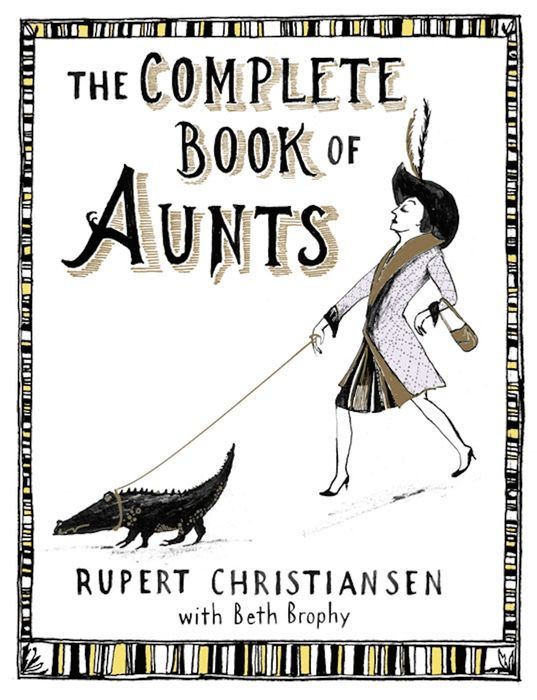
I am a bit of an aunt connoisseur, myself, having been blessed with a plethora of Cool Aunts.
There is, of course, my Aunt Helen, whom I’m named after, and my mother’s Cousin Betsy (“Little” Betsy to differentiate her from several other Betsy’s in the family) whom I am also named after (and thank goodness my father had a predilection for the name Libby or I might be a Betsy, too!) and who I consider a courtesy aunt, since my mother always said Betsy and her sisters were like sisters to her. And my Aunt Mary, who was so beautiful that, at age 4, I named my beautiful black cat after her.
In fact, I have in my mind a coffee table book featuring photos of Cool Aunts with their nieces or nephews, and tributary paragraphs from same explaining what makes their aunts cool. For me, it was how well they listened (in my case, they were trained for it, Helen was a psychiatric social worker and Betsy, a psychiatric nurse) and a streak of rebellion within them (after making her debut in the 1960s, Betsy escaped on the back of a boyfriend’s motorcycle). They understood that restlessness within me that refused to live the life my mother had chosen; and they also helped me find myself beneath the outer layers that my parents had encased me in – and yet, also see my folks as people, to be empathized with.
When I picked up this book, I thought it might resonate with that idea. But, while recognizing favorite aunts, it’s more of an intellectual exercise than what I was thinking of. And it’s missing the certain je ne sais quoi of the story that I stumbled across once on the internet and could never find again, of a Cool Aunt who had lived in the late 19th / early 20th Century in small town America. The women of the town were being routinely attacked by a man there, who would grab them off the street and violently rape them. The people of the town knew who was doing it – they knew his name and where to find him – but for some reason couldn’t be bothered. One day, this cool aunt was on her way into town, and – if I recall accurately – had just reached the main street, when the serial rapist approached her. So she pulled out an axe from the long loose sleeve of her dress and smacked him into the head with it. Which stopped the series of rapes that had plagued the town.
Cool Aunt indeed!
This book is a collection of aunts throughout history, cool and otherwise (although I believe the words “cool aunt” never appear in the book, to my surprise – among my generation and generations after, “cool aunts” are a thing). Christiansen starts off with a history of the kinship relationships of aunts and a little etymological study of the word “aunt”. Then he covers the type of aunts who mother orphaned children, followed by “heroic” aunts – aunts larger than life, perhaps a little intimidating. Of one of these heroic aunts, a niece writes of being intimidated until her aunt begins sharing her love of reading, and finishes:
I started to love her – at least when she was sitting in that green and white chair with a book. She seemed nicer, somehow, maybe because her own fears about who she was evaporated during those interludes. When she read to me, somehow we were both freed. Maybe that was a gift I gave my aunt as much as the one she gave me.
What a beautiful passage.
After a brief foray into X-Rated Aunts (as bad as it sounds) and Brand-Name Aunts (including the now retired Jemima), he covers Exotic and Eccentric Aunts, fictional and a few real. Now those are my kinds of aunts: aunts who participated in the French Resistance, aunts who dated Dillinger and ratted out the mob to the feds, and the immortal (and unfortunately fictional) Auntie Mame.
Then back into bad aunts and literary aunts (Aunt Jane Austen and Aunt “Ginny” Wolf) before dipping into what Christiansen calls “Fairy Tale Aunts” – aunts from children’s fiction, such as Dorothy’s Auntie Em and Aunt Jo March, snidely side-swiping American aunts who took in orphans, such as Pollyanna. Although, oddly, he never mentions L.M. Montgomery’s cornucopia of aunts, some of which are real aunts who unwillingly take in orphans, others of whom say “just call me aunt” Marilla, for example, and including the adorable aunts that Anne adopted when they served as her landladies while she was Queens College. And, then, after discussing Dahl’s evil aunts, he wraps up the fairy tale aunts with Peter Parker’s Aunt May.
After a brief chapter on Honorary Aunts – that is, honorary aunts and agony aunts and institutions called “auntie” for their “aunt-like” insistence on morals and manners – he rounds out the book with guidelines for being a good aunt, with illustrative descriptions from nieces and nephews about their “good” aunts, before finally winding up with a touching epilogue about Christiansen’s own favorite aunt.
In my life, I try to be a good aunt to my six nieces and nephews and stray children of my friends who are mothers. When they were little, I read to them and I still gift books for birthdays and Christmas, supplemented with weird little surprises. I look for ways that we can have fun together. I text them – never call them! – and tell them I’m thinking about them. Even if they don’t reply, it’s good to for them to know that someone is thinking about them without a father’s worry or a mother’s ulterior motive of wanting to know that they’re safe and eating right and getting enough sleep and studying or working diligently. I practice the listening skills that my aunts taught me, even when all I get is an earful of basketball stats, video game history, or online influencer nonsense. Mostly, I am here for them.
As I used to say to their mothers: they need to know that, when they feel like they need to run away from home because they can’t stand you anymore, they can come here, unload their troubles for a few days, and learn to mix the perfect martini before returning home again.
So far, none of them have taken me up on that.
But the offer stands.
 Change+Management