
There is a myth, perpetuated by the media and politicians, that big cities are bad places to live, full of crime and violence, and that small towns are safe places with low crime rates and good wholesome values. And that, if something bad happens in a small town, it was brought there from people from “outside” – probably people from big cities.
To which I say, “Nuts!”
Big cities may have crime, sometimes violent crime – there are more people, and those people tend to represent a diverse background. When you get a lot of people in a small space, who have different cultural expectations of each other, conflicts tend to arise.1
But small towns have their share of crime and violence, and much of it is home grown. The perpetrator is right there, in plain sight – except the people around them don’t want to see it.
Take the small town from this book: not much crime, the citizens say, in the 1960s. Oh, in 1964/65, someone was “nailing stray cats and puppies – alive – to power poles and trees […] Damn kids!”2 Oh and, ” in 1967, two 13-year old boys were horsing around on an old bridge, jumping off into the cold river below. One of them grabbed his chest, fell into the water and was swept away. Weeks later, they found his body: he had been shot. “Dumb accident” – someone must have been taking potshots and one went astray – “probably never even knew he killed a kid.”
Oh, wait, wait: there was the boy scout at the local jamboree, asleep in his pup-tent with another boy, surrounded by 198 scouts and troop leaders just 30 feet away. He’s found one morning covered in blood. No, not a nosebleed, he’d been bashed on his head; concussed badly, he was rushed to the big city of Bozeman3. Someone had sliced open the tent, stabbed him, and clubbed his head (which is what he eventually died of). “Horseplay gone too far,” was the verdict. Another accidental death. Nothing to see here.
Then in 1973, a family of strangers – not from around here – is camping about 50 yards from the jamboree site. Parents, grandparents, five kids, off to see the USA in their Chevrolet.4 The kids slept in a tent and, when they woke up in the morning, someone had slit open the tent and stolen a 7-year old girl, leaving a little blood and a trail through the dew. A panicked search ensues, wiping out any clues. The sheriff arrives, calls in the FBI from Butte.5 Civilians volunteer to help, among them 12,000 airstream enthusiasts from a nearby convention. National guard helicopters. Divers and boaters scouring rivers. Outhouses pumped. The family interrogated, given lie detector tests, their vacation photos magnified and examined for clues.
Nothing.
Forced to admit that maybe bad things do happen in small towns, law enforcement starts pulling in suspects: scary men who told creepy stories; asylum dwellers (and former); traveling salesmen; elderly doctors who picked up hitchhikers because they were lonely; elderly park rangers “a little too familiar with children, not in a sexy way but in a playful way”; “a homeless, disabled war veteran” camped in the park; “a quiet kid, come home from Vietnam to work odd jobs at ranches for pocket money”6; old men, who now “mostly blind” ex-cons with decades-old records of attempted rape; drifters with prison records; a couple of punks from Caspar7 now awaiting trial for raping two sisters – perhaps kidnapping a little girl was a warm-up act for them? A biker gang; an ex-husband; an AWOL marine who hooked up with a hitchhiker and, together, kidnapped and raped a 13-year old girl camping in Washington State; witches, warlocks; people who drove Volkswagens.8
Then someone started writing and calling the missing girl’s mother with ransom demands.
This little girl’s mother is the heroine of this story. Despite her horrific loss, she participates with the FBI’s hunt, talking to her child’s murderer on the phone, multiple times, playing him along, pretending to believe that he will return her child – even after the FBI found evidence that her child was brutally killed by this man – helping law enforcement trap him. She could have done what many other mothers had done in the same circumstances – and that would have been understandable – but instead she helps the FBI hunt down this guy and put him away.
The guy? Oh, he’s a local, a good kid, son of an upstanding citizen. They never expected it, although he was responsible for each of the crimes I mentioned above, plus more. More.
And, in postscript, it turns out the guy’s younger brother also became a rapist – moving to a small town where I once lived – creeping into pre-teen bedrooms to rape children, then terrifying them into staying silent.
Just another good boy from a good family in a small town.9
I haven’t even gone into the whole story here – I haven’t touched on The Murder, the case that broke the whole thing open.
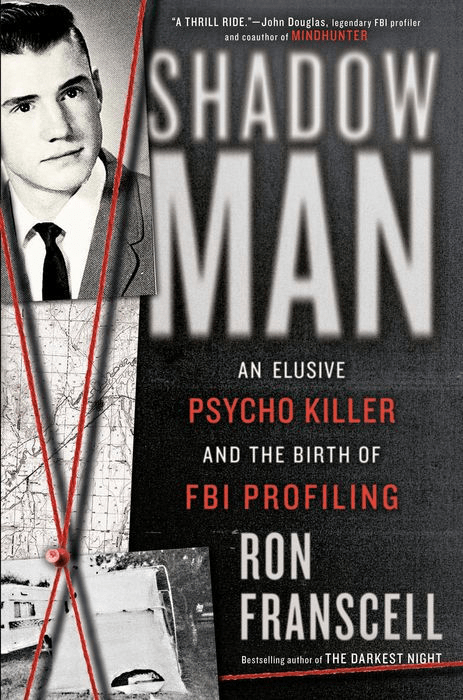
You’ll have to read the book. The author tells the story well, drawing you in, providing clues so subtly that you read right past them, then tying it all together at the end.
Well done, Ron Franscell, well done.
- When managed effectively, bringing people together who have diverse cultural expectations in pursuit of a common goal can be create productive conflict that spurs them to heights they couldn’t achieve on their own. Google Mandar Apte for examples. ↩︎
- If you read a lot of true crime, the hairs on the back of your neck just went up. ↩︎
- That’s how small this small town is – the nearest “big city” is Bozeman. ↩︎
- I just say that because it sounds good; I don’t know what they were actually driving. ↩︎
- I guess another “big city’ since they’ve got an FBI office. ↩︎
- “He was just… odd.” ↩︎
- Must be another big city, right? ↩︎
- AKA, Hippies. You know, like Manson. ↩︎
- WTH was happening in that family to create two such monsters? ↩︎
 Change+Management