
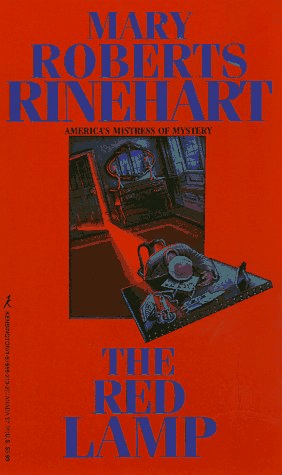
Looking for a good spooky beach read? This one will truly make your skin crawl.
The novel follows the 1924 journal of “William A. Porter, A. B., M.A., Ph.D., Litt.D., etc.” As the university year ends, he finds himself a little burnt out – tired of students who think the Ancient Mariner was written by Wordsworth, and colleagues who discuss spirits in a way that gets a rise out of his skepticism. Luckily, he has just inherited a beach house from his Uncle Horace, a beautiful, large mansion right on the water, with a beautiful sweeping staircase, original wood paneling, early American furniture, a large patio overlooking the water, a boathouse, and a fully-equipped gatehouse. His niece – who he and his wife raised from childhood – and her boyfriend, a young and impecunious professor, are coming to stay the summer.
And yet his wife – a woman who quietly insisted that she saw dead Uncle Horace marching with the rest of his alumni class at commencement, although Porter didn’t see his ghost – is reluctant to go. She has a bad feeling. A bad feeling that proves true, for the summer is far from restful.
First, there is the way that Uncle Horace died, killed in his study, and his old friend dead in the hallway outside the study. And then there’s that red lamp, a red lamp like those traditionally used by mediums, and one medium in particular. And the triangle in the circle, said jokingly by Porter to ward off demons, and yet it keeps appearing mysteriously about the place, near sheep eviscerated and left for dead. And then near the victims of a serial killer operating around the summer house.
And Porter becomes a suspect. Even if he wasn’t terrified by, if not the spiritual occurrences but the idea that someone is wandering around the house unchecked by locked doors, and seeming to plot against him, becoming the main suspect and subject to harassments by law enforcement and the media, he is unable to get the rest and relaxation he craves. Hardly a restful summer.
I love these old mysteries with their creepy whisperings in the shadows; the creaky old houses; the dark and stormy nights, thunderstorms preceding yet another murder. And all the while, the main character – a crusty old man or woman – holds firmly to a refusal to credit the spooky events to the supernatural, and insists there must be a rational explanation (and there is). Seconded by a pert flapper niece and her misunderstood or impecunious boyfriend, here just starting out in an academic position; sometimes his fortune has been wiped out by bank failures during the depression; sometimes he is suspected of robbery. And yet she keeps a perky upper lip and refuses to give in to despair.
This one, for Rinehart, is unusual in that it has a man as the main character – usually her main characters are acerbic aunts, intrepid private nurses, or wistful young women with a jaded views of their futures. But the rest of the book runs true to form: someone is trying to get the rightful owner out of the house with spooky hauntings for reasons unknown, servants don’t share things with their employers that could illuminate the mystery, murders occur that are clearly connected to each other and maybe the mystery, but no one is sure of the motive. Secrets from the past lurk about. And, when the solution is finally revealed, the murderer is a surprise and their reason for the murders make sense within the murderer’s context but that no one else could see.
So, if you’re feeling a little warm at the beach and want a book that sends chills down your spine, reach for this one. It’s available on e-, so you won’t even need to carry yet one more book with you.
 Change+Management