
Have you ever had one of those trips where nothing is going right?
My husband drove my sister-in-law to the airport this morning at the crack of dawn. When she got to TSA, she realized she had left her wallet with her ID at the house. (The one time you are glad that your plane is delayed.) Not as bad as the time she was staying in his New York bachelor pad because she had an early flight to the British Virgin Islands the next morning and realized, at about midnight, that she needed her passport to get there, and had to rush back to New Haven to get it.1
But sometimes, as in this book, it isn’t your fault: it just seems like fate is against you.
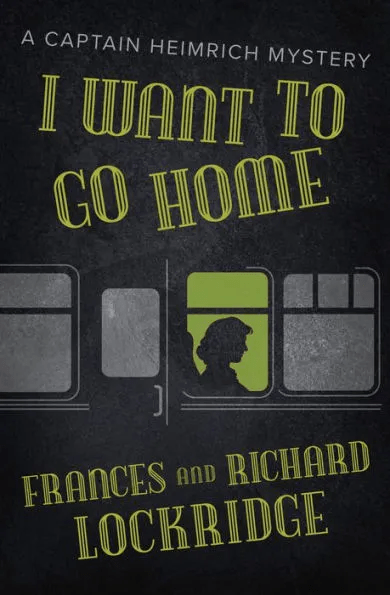
Jane has been away from home too long. She was a WAVE in the WWII pacific theatre, then stayed in California afterwards, unwilling to go home to downstate New York, where she would be reminded of the husband that she met, loved, and lost over Europe. But now something is telling her she needs to get home, home to her Great Aunt Susan’s mansion where she grew up, home to Aunt Susan. And so, despite a last minute (rather perfunctory) proposal from her boyfriend, Ray, she heads home.
But then everything seems to go wrong.
Her Great Aunt doesn’t reply to Jane’s letter or her cable and she wonders if she is still mad at her for marrying a man she would disapprove of. Jane leaves enough time to get from her LA hotel apartment to the train station – since her husband died in a plane crash, she is unwilling to fly – but when she goes to check out, the front desk seems to have mistaken someone else’s call the night before extending their stay with Jane’s reservation to leave, and her bill isn’t ready. There isn’t much of a delay while they prepare it but it eats up the practical cushion she left for errors. Then her cab breaks down five long LA blocks from the train station. She’s in heels and a traveling suit, with two huge suitcases, and the train leaves in 10 minutes. Two nice-looking young men in a sedan offer her a ride and she is about to get into their card when, out of nowhere, her now ex-boyfriend shows up to rescue her. (He has just missed her at her hotel and hoped to catch her at the train station.) She barely has enough time, in her whirlwind ride to the station, to share her tail of woe with him.
But she makes her train!
Onboard, she sits back and daydreams of home, enjoying her journey. At dinner, she meets a nice young naval man – they seem to have so much in common. When the train pulls into a station along the way, he tells her they have an hour stop there and asks her to stretch her legs with him. They hop off the train – it’s a little colder than she realized and he advises her to go into the station with him, where it would be warmer. Instead she pops back on-board to grab a jacket.
And the train leaves.
It turns out that both she and the nice young man hadn’t set their watches forward to Mountain time and didn’t realize that what seemed like an hour stop was only a few minutes.
But, as she starts to wonder about fate’s determination to make her miss the train home, she starts to imagine a human intervention instead. Could this be deliberate? But why? She flags down a porter and hands him a cable to be sent back to Ray in California. The porter agrees to send it in the morning when they get to Albuquerque and sets it aside on a shelf above his seat in the hall, then goes about his business.
Meanwhile Ray has already been struck by these coincidences and, overhearing a phone call by the two nice young men from the car that almost gave Jane a ride to the station, he also begins to wonder about human intervention and after probing further – at her hotel, along her route to the train station – decides that maybe it would be a good idea to join Jane. He grabs a seat on the next train to Chicago, intending to catch her connection there. And begins to have adventures of his own.
But what is happening “back home” that could cause someone to want to delay Jane’s arrival? Her Great Aunt is ill – certainly terminally, perhaps showing a cognitive decline that would prevent her from changing her will if Jane returned, to shift the bulk of her fortune back to Jane. But is it really cognitive decline? She is certainly imagining that she is being poisoned.
And Great Aunt Susan’s house is full of people: her stepson, Frederick, who has come to like being in charge; his condescending wife so full of sympathy for people who aren’t as perfect as she; and his misfit son. Jane’s cousin, John, a criminal lawyer. John’s younger brother, Eliot, who would like to have a business of his own but can’t afford it and his worrying wife; his young son and his teenaged daughter – now living in Jane’s old room. Frederick has intercepted Jane’s letter; the whole family knows Jane’s on her way and understand the risk to their inheritance. But they haven’t told Great Aunt Susan – too much stress for the old dear at a time like this, even if she does ask about Jane so much.
This book has a definite feel of the early 20th century to it, in tone, in the hectored terror, the sense of urgency that Jane feels to get home. The detective – Captain Heimlich of the NYS Police – comes late into the book and almost feels passive, sitting quietly with his eyes closed after inviting each person to tell their story, seemlingly asleep while his brain ticks over the evidence.
This book has one of the most practical solutions to a whodunnit I’ve ever read. And the action propels you forward, your stress rising as the plots against Jane become increasingly apparent, like a scene out of North by Northwest.
So if you’re feeling hectored and hurried, and worried about an upcoming trip, this is a great book to read. Just don’t start it in the evening as you won’t be able to put it down and go to bed.
- Hey, we all make mistakes like this. My husband and I once rushed to Newark airport to catch a flight, only to realize upon arriving there that we needed to be at LaGuardia instead. LGA is 30 minutes as the crow flies and 4 hours in rush hour traffic. The Newark ticket agent (remember ticket agents! ah, the good old days) just laughed: people do it all the time, he said. ↩︎
 Change+Management