
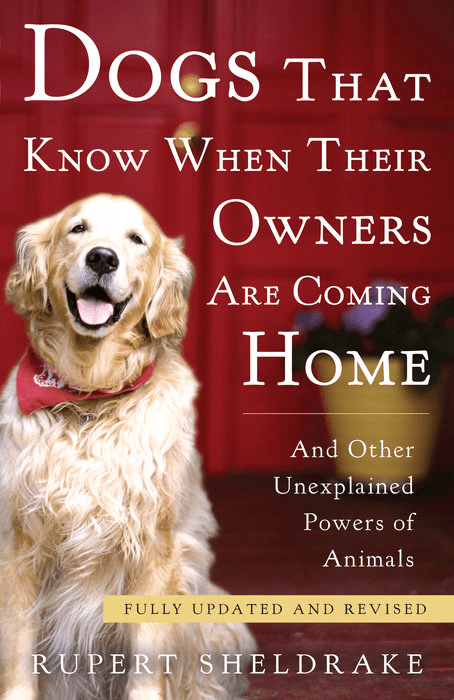
I saw a meme yesterday that stated that, in Hawaiian, the person who cares for a pet is called a Kahu, which means “protector” and also “servant”.1 I mention that only because the title of this book uses the word “owner” to designate the person who has been domesticated by their pet. I suspect that animals see us as very bad servants, for the most part.
Anyhow, I picked up this book because I was curious about what the author would say about pets who know when their people are coming home. The cat that inhabits my apartment senses when my husband is coming down the hall and will often greet him at the door, demanding attention2, although when he returned home on a late flight from a longer solo trip recently, she grew alarmed: who is coming into our home at night, after we’ve gone to bed?
I am often impressed, when I go to zoos or on trips where you see animals in the wild, at how rude humans are, seeking to attract the attention of the animals, always wanting to be the center of attention.3 And I suspect much of pet-keeping is part of this, which explains why we name our pets and ascribe psychic powers to them. She knows when I am coming home, we tell ourselves, making the human the center of the story again. Hey, if it keeps people from abusing or abandoning animals that they have accepted responsibility for, I am all for it.
Sheldrake’s book is an interesting combination: he opens by looking at the animals (cats, dogs, horses, birds, etc.) that most of us are familiar with, and examines the unusual powers that people ascribe to each variety, and whether there is any noticeable difference between breeds within that variety (Pekinese vs German Shepard, for example). Then he looks at the specific powers ascribed to animals, from empathy to animal to animal communications, earthquake prediction, and premonitions of death and other warnings, giving heart-warming stories of each. Then he looks at scientific facts, such as the navigation used during animal migrations, that could shed light on possible causes. And last, he explains how science works, and how people who live with pets could collect data scientifically, as opposed to anecdotally, and how he might design a scientific experiment to test the hypotheses that people have made up to explain why animals behave the way that we think they do.
Throughout the book, Sheldrake makes the case for scientists to open their minds to studying things people are curious about, not just dismissing these topics because they are skeptical. This is a plea that others have made – UFOlogists, Bigfoot hunters, paranormal researchers. When you read books by people who spend their time thinking about these things, they inevitably say that they’ve spoken to scientists who want to study these topics but have been shamed into not participating. It would be professional death to participate, they say.
I would say that we should study these things. But with the recent truthiness of everything from politics to medicine, I can see why scientists would be hesitant. I read something the other day that said that people with autism share a larger proportion of DNA with Neanderthals than people without, but if someone is highly invested in believing that childhood vaccinations cause autism, a scientific study is unlikely to persuade them otherwise and could make the scientist a target. It’s gotten the point where it’s hardly worth it to say anything anymore.
If you like reading about animals, are curious about animal behavior, or curious about how to apply science to something that the animal that you call your pet is doing, this is a fun book to read.
Post-thought: Sheldrake should have written this for junior- or high-school reading level, gotten some kids interested in science. Penguin-RH, think this is your book, give that a thought.
- Ironically, this may be mainly a non-Hawaiian internet thing. Googling, I find that Hawaii Public Radio declared Kahu their word of the day, and defined it as “pastor” with subsequent meanings being “honored attendant, guardian, nurse, keeper of bones, keeper, administrator… warden, caretaker, master, mistress.” So not as “aww” as social media would have it. ↩︎
- When I return home, she raises an eyebrow as if to say, You again? ↩︎
- I catch myself doing it, too. ↩︎
 Change+Management