What, you are thinking, is a Limberlost? It sounds like Stranger Things‘ Upsidedown – but it’s not. It’s a wetlands forest in Eastern Indiana. It used to stretch for 13,000 acres but enterprising Americans drained parts of it in the late 19th Century. As many wetland forests do, it had a bit of a reputation as a place where bandits hid out, and people who lived within its confines were often looked down upon.
That’s one of the problems that Elnora, a young woman in high school, has. She and her mother live in poverty in the swamp, scraping a living on their meagre land. Elnora’s mother could have made a lot of money selling lumber from her land, but chose not to. She is a bitter person because her husband died in quicksand the night that she was giving birth to Elnora; and she blames Elnora for his death (because if she hadn’t been giving birth, she could have saved him).
Elnora has a secret hiding place in the swamp and collects rare moths and flora that she secrets from her mother and later sells to collectors. With this money – and the help of neighbors who champion her – she plans to go to college, against her mother’s wishes. However, to participate in the graduation ceremony and get the diploma that will enable her to go to college, she needs a new dress. The neighbors tell her mother and everyone expects that the mother will purchase it for her but, instead, the mother gives her an old dress, and then slaps her. The neighbors intercede, revealing that Elnora’s dead father wasn’t true to Elnora’s mother, and her mother realizes how she has prioritized the dead over the living.
After graduating, Elnora meets a rich young doctor and they fall in love, but he is engaged to another girl. Elnora encourages him to stay true to his fiancée and refuses to act on her love for him. When he returns home, the girl breaks up with him at their engagement party and he returns to Elnora and proposes. But then his ex-fiancée shows up and attempts to persuade Elnora that he’s on the rebound. Elnora disappears without telling anyone where she has gone.* Will her true love find her in time?
Originally published in 1909**, this book was written just as the destruction of the Limberlost was really gearing up. Gene Stratton Porter, like Marjorie Kinnan Rawlings, she wrote about rural people who struggled to make ends meet and faced often terrible decisions. This is in contrast to Laura Ingalls Wilder, who also wrote about “country girls” who had little money (the girls often walked to school barefoot). But all three authors wrote beautifully about the natural landscape around them, the weather, the grasses and trees, the animals.
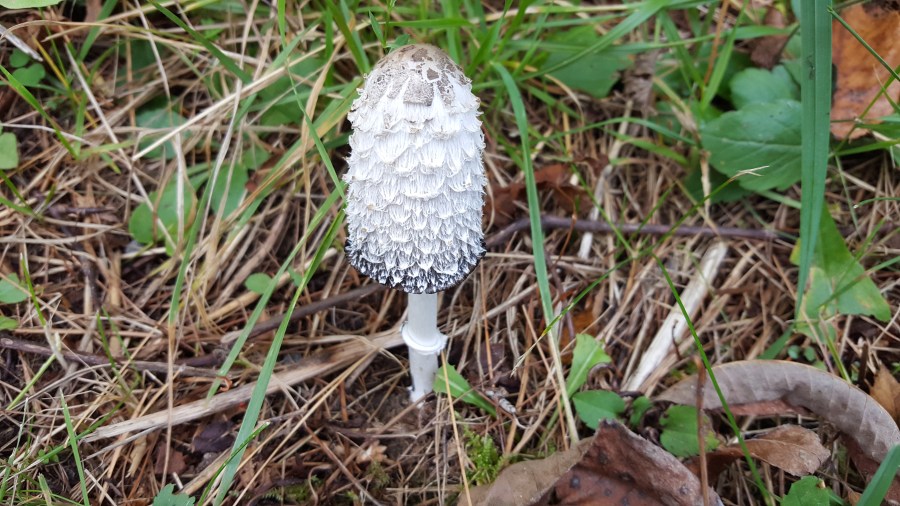
That, I think, is what I loved best about this book: Elnora’s adventures in the swamp, seeking out moths to sell to collectors. Before reading this book, moths, to me, were just white fluttery things that bang senselessly against lamps or eat your woolens in the summer. But the moths that Elnora seeks are beautiful, huge, colorful creatures that inhabit the wetlands, as varied and alluring as butterflies. It’s like mushrooms: we think of mushrooms as those things we buy in the store, for the most part drab brown, grey or white growths; but several years ago I went on an autumn hiking trip*** in southern Quebec/northern Vermont and took hundreds of photos of the variety of mushrooms, large, small, tiny, enormous, in all colors.
Elnora’s situation also resonated with me: the misunderstood girl whose mother kind of left her to grow up on her own. My own mother was nothing like Elnora’s mother. But I understood Elnora’s disappointment when she expected a graduation dress and received a rag. My mother had the habit of persuading me that I wanted something, promising to give it to me, then falling through. Once, when she was living in Thailand, I admired a silk skirt that she had hired someone to make for her there: I liked the gentle reds of the fabric and the really soft material. She offered to have one made for me but, when it arrived, it was made out of a stiff, Kelly green and black fabric. It didn’t drape the same way and wasn’t soft or gentle. She did this so much that I started refusing to allow her to buy things for me. I don’t know why she did it – it was like she wanted to show generosity to me but also wanted to push me away.
Throughout the book, Elnora works hard, is generous to others, and patient with those who wrong her. She doesn’t poach the man she loves from his fiancée. And yet, while she is sometimes rewarded, she often gets the short end of the stick. Isn’t that the way it is sometimes? I remember screaming at our ungrateful rescue cat, one night when she refused to let me sleep and then bit and scratched my arm without provocation, that I didn’t deserve her abuse, that I was a good person who had always treated her kindly, and did the right thing by her, and deserved better from her. My husband – who she adores – pointed out sleepily that I probably wasn’t speaking to the cat right then, and I knew he was right.
This book is a little dated – you can really tell when it was written by the resolution of Elnora’s conflicts. But it is a beautiful book and well worth reading.
*This book is actually the sequel to a book that could be called A Boy of the Limberlost but is actually called Freckles about a young man, with freckles, who lives in the Limberlost and collects moths. When Elnora runs away, she runs to stay with Freckles and his wife, who live in a big mansion overlooking a lake.
**I just realized that my copy, which I purchased at an antique store in Wisconsin, is copywritten 1909! It’s a beautiful edition, with gorgeous binding embossed with some very arts-and-crafts wild lilies and sumptuous illustrations by Wladyslaw T. Benda.
***Don’t get me wrong: I am not a hiker. I enrolled in the trip because it said it was a walking trip. It turned out to be a day-hiking trip. I paced myself and – with the generous advice of the true hikers on the trip – managed to finish (and have a good time) without injuring myself. But I do think they should brand it a hiking trip and not a walking trip.
 Change+Management