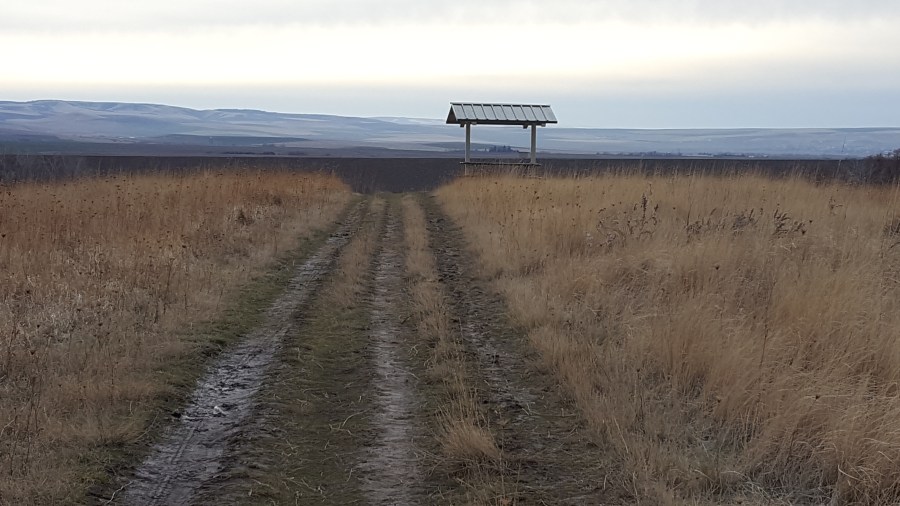
Have you ever gotten lost on a park trail?
It is remarkably easy, in State and National Parks, or along the Pacific Crest or the Adirondack Trail, to step off the known path, just for a moment and not be able to find your way back to the path. Even seasoned hikers get turned around. Cell coverage is limited or non-existent. When and if missing adults are found later, they are often within 1 1/2 miles of where they were last seen or expected to be – they just couldn’t find their way back or got too injured to return on their own. (Children are supposedly often found much further away for some reason, sometimes beyond obstacles like mountains that shouldn’t have been able to traverse.)
I’ve always been very interested in this topic, of people who go missing. But not people who go missing in urban areas, where you would expect that they either chose to go missing or were taken by someone; people who seem to vanish in the wilderness. I don’t know why the fascination. Perhaps it’s early memories of hiking on my parents’ forested property which backed up to the national forest on three sides. It was second growth forest, having been logged in the early 20th – and maybe even the 19th century – back when they logged selectively. So the largest trees were gone, leaving behind huge stumps like witch’s cauldrons. The undergrowth there was impassible, ferns taller than we were, deep humus on the forest floor. It was quiet, no birdsong or squirrel chatter. I was terrified to be alone in those woods when I was small – afraid that I would be lost in them, like Hansel and Gretel. That last bit, my mother always added when she told the story later. Reassuring.
I’ve been reading books about this for years, I realized when I went to write today’s post. The Wild Within by Paul Rezendes. Case Files of the Tracker by Tom Brown, Jr. Tim Cahill’s Pecked to Death by Ducks, Pass the Butterworms, and Hold the Enlightenment. (Outside magazine does some great writing on these topics.) Lately I’ve read The Darkest Places (collected, of course, by the editors of Outside magazine), The Cold Vanish by Jon Billman.*
And Trail of the Lost.
This book was so good that I actually bought and read an earlier book by the author right after finishing it. The trail in the title is the Pacific Crest Trail (PCT), which you may have heard of by reading, or watching the movie of, the book, Wild (which I have not). Wild was, from what I can tell, a bad influence on a lot of people the way that Eat, Pray, Love (another book I’ve never read) influenced a lot of people earlier and for much the same reasons. Anyway, Wild made people think that they could solve existential crises by hiking the PCT, even if they had no experience hiking. Walking is great for emotional regulation – I recommend it. But not alone, in the wilderness. That just seems like a recipe for disaster. In so many of the stories I’ve read about adults who go missing, someone was emotionally upset when they set out: they had a fight, had gotten fired or divorced, had lost a child.
Emotional distress, as my high school driver’s ed. teacher used to say, is distracting. Mistakes happen. Sometimes in deadly ways. Look at all the people taking selfies who take just one more step back, right off a cliff. That kind of distraction can lead you to miss clues that something bad is about to happen to you: an animal, a storm, you lose the trail, turn an ankle, stumble into something you shouldn’t, don’t have your radar up about strangers… The kind of distraction that leads you to make bad decisions, like the young man in Into the Wild, which I also read.
Trail of the Lost follows three people – all young men – who disappeared on the PCT. Separately, not together. Along different parts of the PCT, which stretches from the Canadian Border down through California: one near the northern end, two in different parts of California. They were very different young men, one was an experienced hiker, one didn’t seem to have much experience at all. But they all seemed to be at loose ends and – to some extent – emotionally distressed. Distracted.
Lankford seems particularly qualified to write about this topic. She worked for a number of years as a park ranger in the kind of places where distracted visitors get lost or injured: the Grand Canyon, for example. So she is experienced in search and rescue and she speaks with authority about the searches for these young men. For there were extensive searches, both officially and unofficially. Lankford describes the people who went missing, what was going on with them when they disappeared, the areas that they disappeared in. She explores different theories of what could have happened to them – animal predation (there were active mountain lions in one area), cult-recruitment (apparently there is a cult that recruits along the PCT), weather (which changes suddenly and dramatically at altitude), and human predators.
She also describes the people who are committed to finding these missing men, some of whom connect and share resources and ideas. One of whom is a woman who confesses she needs to take a break from the years-long search: she has breast cancer and needs a double-mastectomy. She needs to go back east for the procedure, so that she can recuperate at her sister’s home. Then the sister’s daughter’s ex-boyfriend violates a restraining order and breaks into their house in an attempt to kill the daughter, and puts both mother and daughter in the hospital. So, instead of recuperating in the care of her sister and niece, the searcher ends up caring for them. Whoa.
I highly recommend this book (and the others on the list above, well maybe not the Tom Brown, he’s a little weak and I kinda wondered how accurate his stories were). If you like mysteries, if you like hiking, if you just want a great read. If you want just one other on this topic: The Cold Vanish. That was also a great read, by a knowledgeable author. Just writing this makes me want to read it again.
Just don’t expect closure. Books about missing people often lack closure.
*I know I’ve got more books on this topic on my nook app, including a couple about kids who went missing in state parks. But I stopped maintaining my shelves long ago – too much work – and now I can’t put my hands on them. Look, nook guys, these books are all catalogued. Why not add a feature that lets me group by subject?
 Change+Management