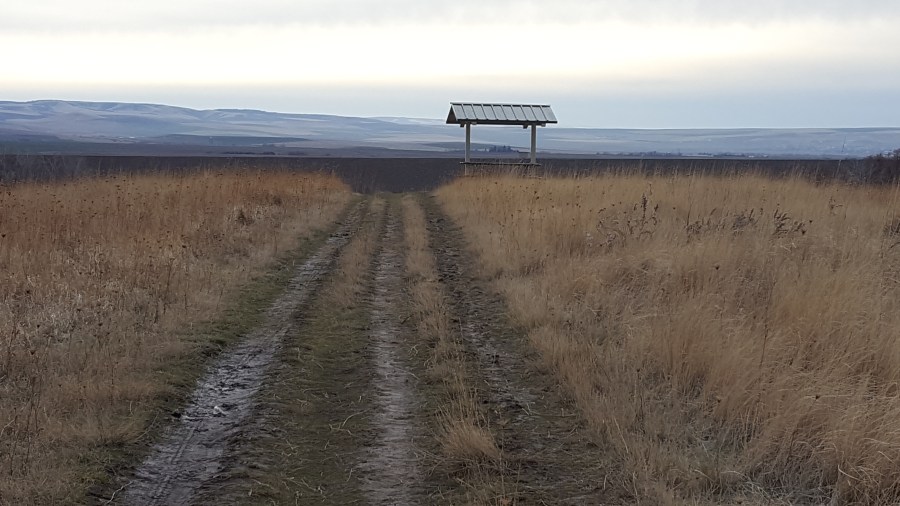
If I wanted to tell you how to get to the place I lived in high school, I might tell you that, once you got off the freeway by the Chevron station, you needed to proceed through the first stoplight, then remain on that road and stay to the center as it expanded to four lanes, so that you could take a left at the next light. When the road splits by the gothic-looking elementary on the hill, stay to the left, past the public rose garden, and the lumpy-dump apartments where Windy lived, and the copse where that girl, Julie, found the Hillside Strangler victim when she was in 5th grade. Past the green city park with the great playground, and the tiny 1960’s subdivision of maybe 10 houses, and the water-meadow where the fat pinto grazed. Then straight and narrow down the slope past the tiny store that started by selling gas in the 30s, then milk-bread-eggs-canned-goods-beer, before finally landing as an overpriced art gallery where my mom spent way too much money. Over the old bridge with the waterfall on the left, past the steep driveway straight down the hill to sheep farm where Annie and her family lived with her grandmother, and around the sharp bend with the two flashing yellow lights where, if you missed the curve coming the opposite direction, you sometimes bounced off the low stone wall and ended up in Annie’s yard far below (if you were lucky). Pick your way through the illegally parked cars where people climbed down the long cliffs to the unmarked nude beach. Then a long stretch with woods uphill to the left, and garages and parking pads off to the right, the houses downstairs, invisible to the road. Watch out for crossing raccoon families, especially in the fog, until the tall pines close in on either side of the road, and when an overgrown pasture suddenly opens up on the left, slow down and, as the road curves to the right, keep an eye out for the cube of a volunteer fire station because that’s when you need to slow to a crawl and turn on your left blinker. Ignore the impatience of the local behind you who knows the road around the bend turns off to the right – not the left – and can’t figure out why you’re slowing down. Just as you pass the point road on the right, turn sharply to the left and gun the engine to get up the slippery blacktop to until you reach the flat spot, then downshift and pick your way carefully through the cut in the woods, past the barn, and around the leach field.
If I told you where the starting point of that journey was, those directions would have been enough to get you to the place where we lived, much more accurately than typing a street address into GPS, which would probably have you shooting past the driveway and ending up at the neighbors down the road by mistake or maybe turning around when you get to the fire road or the national park.
There are still rural places in the US where people don’t have street addresses and give directions like that. Sometimes because the world has deemed them not worth the effort; sometimes because the residents have, themselves, opted out of participating in the government. If you don’t have a street address, it can be challenging to get services (try giving something that sounds like my directions to 911), county water or sewer, public education, to vote, serve on a jury, or (and the reason most people opt out) pay taxes. It’s the reason why so many rural census workers get shot or at least chased away.
The Address Book: What Street Addresses Reveal about Identity, Race, Wealth and Power is a fascinating look at the concept of street addresses. I’m only on chapter 9, and already the author has talked about:
- The challenges of people who live in the slums of India to get street addresses so they can be recognized by their government as people, with the rights to government services, banking, and voting.
- John Snow’s work tracing the origins of Cholera using street maps of London.
- What people did before street addresses – apparently even the mighty apparatus of the Roman Empire didn’t use street addresses, which makes you wonder what our descendants will someday marvel that the mighty US, Chinese, and Russian empires didn’t have.
- The birth of the concept of street numbers so that people could be tallied, taxed, and conscripted.
- Urban planning and the modern street grids
- How Korea and Japan name streets – or don’t – and why asking for directions in Japan can be confusing to Westerners
- Street names as a form of protest that drew the Northern Irish and Iranians together
- and the naming of streets in Nazi Germany in order to facilitate the Holocost.
Gosh I love books like this. When I first took Clifton Strengthsfinder, I protested to the person administrating it that I didn’t like collecting things – the idea of accumulating anything but books repelled me – until he laughed at me and reminded me that I collected ideas and information, which I had to admit was true.
And this book does not disappoint in that category. It’s easy to read, full of fun stories packed with inside information that make you look at the world differently, and I look forward to finishing it, the next time I am on a plane or staying away from home, or stuck in a waiting room, which is when I read e. When I am at home – the other place I read recreationally – I read paper.
 Change+Management